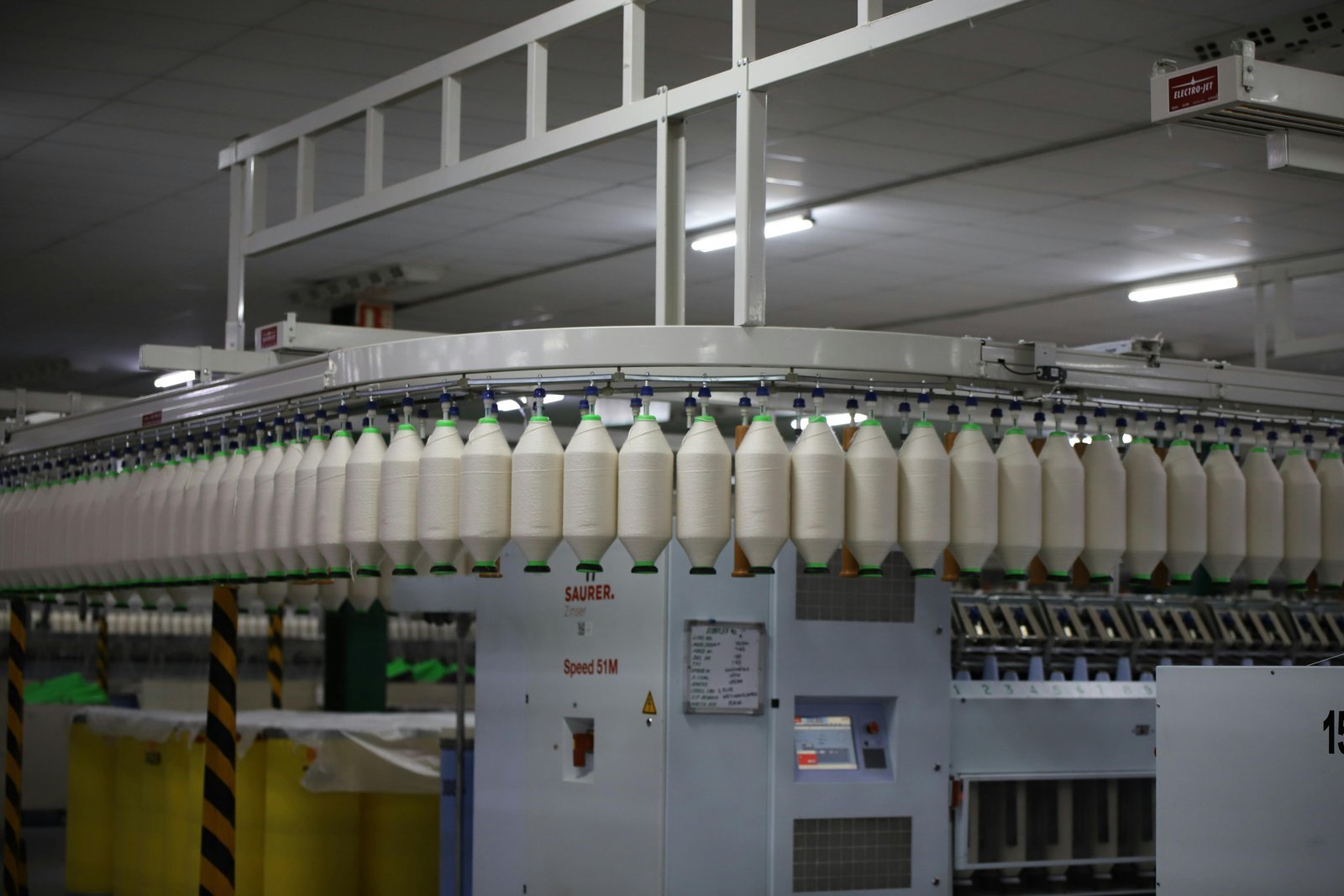
In the global textile supply chain, few raw materials are as widely used — or as consistently underappreciated — as polyester DTY yarn. From sportswear and home furnishings to industrial fabrics and technical textiles, draw textured yarn underpins an enormous share of the world’s woven and knitted production. For manufacturers, traders, and sourcing professionals, understanding DTY’s properties and sourcing landscape is essential to making sound procurement decisions.
What Is DTY Yarn?
DTY stands for Draw Textured Yarn. It is produced by taking POY (Partially Oriented Yarn) as a feedstock and passing it through a draw-texturing process that simultaneously stretches and twists the filaments, imparting a characteristic crimp, bulk, and elasticity to the final yarn.
The result is a soft, voluminous yarn with excellent covering power and a natural-looking texture that is far more versatile than flat, unprocessed filament. DTY can be produced in a wide range of deniers and filament counts, and is available in raw white, semi-dull, full-dull, and dope-dyed variants — giving manufacturers extensive options for both appearance and performance.
Polyester DTY yarn is used across virtually every segment of fabric production: weft knitting for apparel and sportswear, weaving for home textiles and curtains, sewing thread, and a growing range of technical and industrial textile applications where polyester’s durability and chemical resistance are valued.
Why Polyester DTY Dominates
Several factors have made polyester DTY the dominant choice across global textile markets:
Cost efficiency is the most obvious. Polyester raw material costs have remained competitive relative to natural fibers, and the DTY production process is highly scalable. This makes polyester DTY particularly attractive for high-volume fabric production where margin pressure is intense.
Consistency is another key advantage. Unlike natural fibers, which vary by harvest season, origin, and grade, polyester DTY offers reproducible physical properties — tenacity, elongation, shrinkage — that allow fabric mills to maintain tight quality control across production runs.
Performance characteristics have also improved dramatically. Modern DTY yarns offer moisture-wicking properties, UV resistance, colorfastness, and dimensional stability that meet or exceed the requirements of demanding end-use applications. Functional finishes applied during or after texturing can further extend performance.
Sourcing DTY from China: What to Consider
China remains the world’s dominant producer of polyester DTY yarn, accounting for the majority of global output and export volume. For international buyers, sourcing from Chinese manufacturers offers access to a vast product range, competitive pricing, and established logistics infrastructure for large-volume shipments.
When evaluating Chinese DTY suppliers, key considerations include production scale and quality certifications, the supplier’s experience with export documentation and compliance, lead times relative to your production planning cycles, and the ability to offer consistent quality across repeat orders.
For buyers in South Asia — including India’s significant textile manufacturing base — Chinese polyester DTY represents a critical import commodity. The ability to source reliably, at scale, from experienced exporters with established FOB pricing and documentation processes directly affects mill competitiveness.
The Bottom Line
Polyester DTY yarn is not a commodity in the pejorative sense — it is a technically sophisticated material whose quality, consistency, and sourcing reliability have a direct impact on the fabrics built from it. Procurement professionals who invest in understanding DTY specifications and building relationships with capable suppliers gain a meaningful edge in both cost management and production quality.
import your content above to get started.