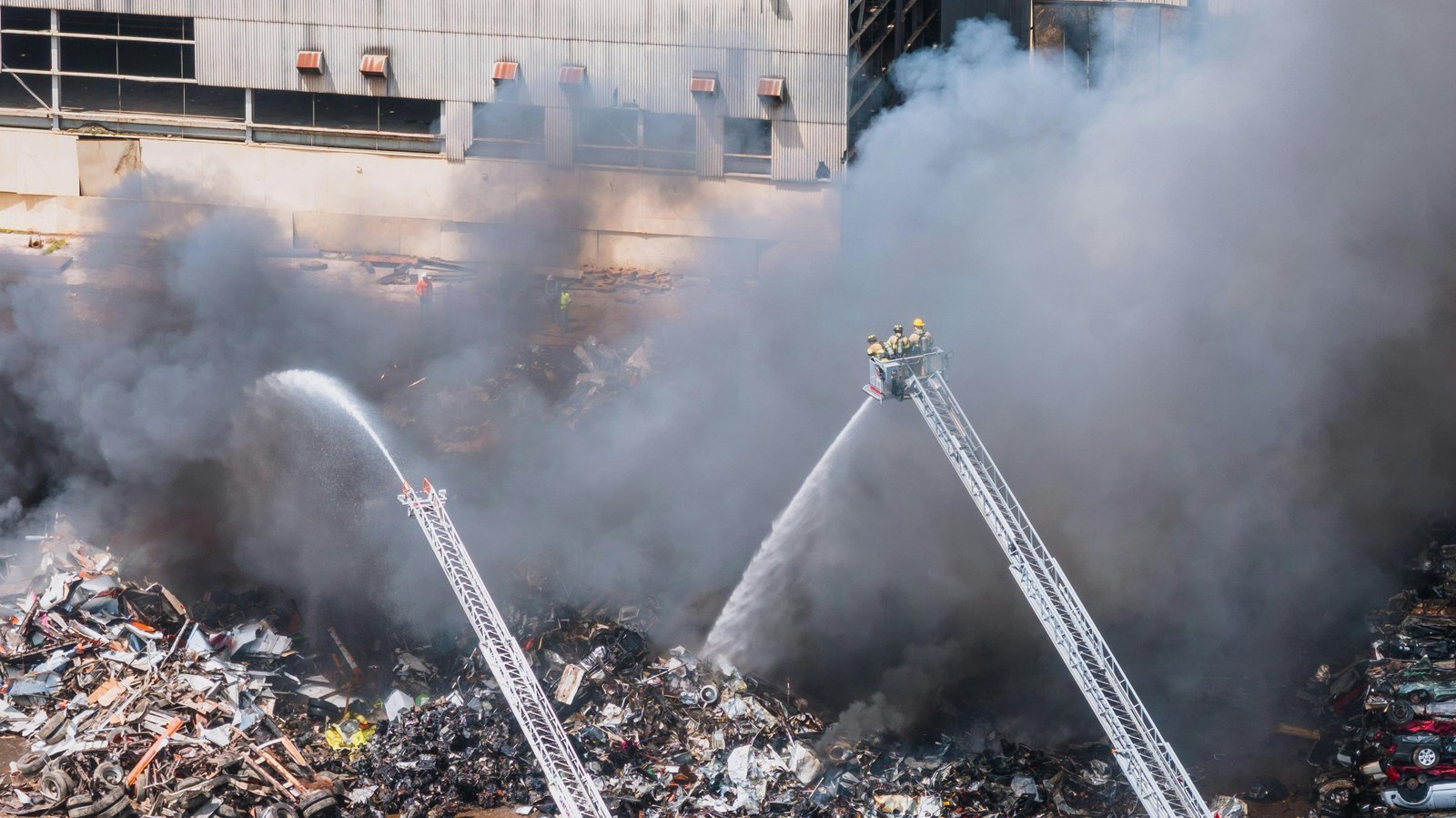
Industrial facilities face fire risks that standard extinguishers and sprinkler systems simply cannot address. Whether it’s a petrochemical plant, a power generation facility, a storage terminal, or a large manufacturing complex, the scale and intensity of potential fires in these environments demand a different class of suppression equipment. That’s where fire monitors come in.
What Is a Fire Monitor?
A fire monitor is a high-capacity, directional water or foam discharge device designed to project large volumes of suppression agent over significant distances with precision. Unlike a fixed sprinkler head, which disperses water in a fixed pattern over a limited area, a fire monitor can be aimed, adjusted, and repositioned — making it far more versatile in dynamic fire scenarios.
Modern fire monitors are available in a wide range of configurations: manually operated, gear-driven, electric, and fully remote-controlled. Flow rates vary from a few hundred liters per minute for smaller portable units to several thousand liters per minute for large fixed installations. This scalability makes fire monitors suitable for everything from warehouse fire defense to offshore platform protection.
Why Industrial Facilities Rely on Fire Monitors
In industrial fire protection, the primary challenge is coverage. Large open areas, tall storage racks, outdoor tank farms, and loading bays create fire scenarios where conventional suppression systems either can’t reach the seat of the fire or can’t deliver enough agent fast enough to matter.
Fire monitors address this challenge directly. A well-positioned monitor can project a solid water stream or foam blanket across distances of 50 meters or more, allowing operators to attack a fire from a safe distance while protecting exposures — adjacent equipment, structures, or storage areas — at the same time.
In facilities handling flammable liquids or gases, foam monitors are particularly critical. Applying a foam blanket rapidly over a spill fire or tank surface can suppress vapors and prevent reignition in a way that water alone cannot achieve.
Key Selection Criteria
Choosing the right fire monitor for an industrial application involves several important considerations:
Flow rate and throw distance are the primary performance parameters. The required flow rate is typically determined by hazard analysis and applicable fire codes, while throw distance dictates where monitors can be positioned relative to the hazard.
Drive mechanism affects how quickly and precisely the monitor can be aimed. Manual monitors are simple and reliable but require an operator in close proximity. Gear-driven monitors offer smoother adjustment under pressure. Electric and remote-controlled units allow operation from a safe distance — essential in high-risk or enclosed environments.
Construction materials matter in corrosive environments. Stainless steel and aluminum alloy monitors are preferred in marine, offshore, and chemical processing applications where carbon steel would be vulnerable to corrosion.
Integration with fixed systems is increasingly expected in modern industrial fire protection design. Monitors connected to deluge valve systems, fire detection networks, or central control panels can activate automatically on alarm — reducing response time and eliminating dependence on personnel availability.
The Bottom Line
For industrial facilities where fire risk is significant and conventional suppression systems fall short, fire monitors are not optional equipment — they are a core component of a credible fire protection strategy. Selecting the right monitor type, positioning it correctly, and integrating it with the broader suppression system are decisions that directly affect both life safety and asset protection outcomes.
Paste or import your content above to get started.