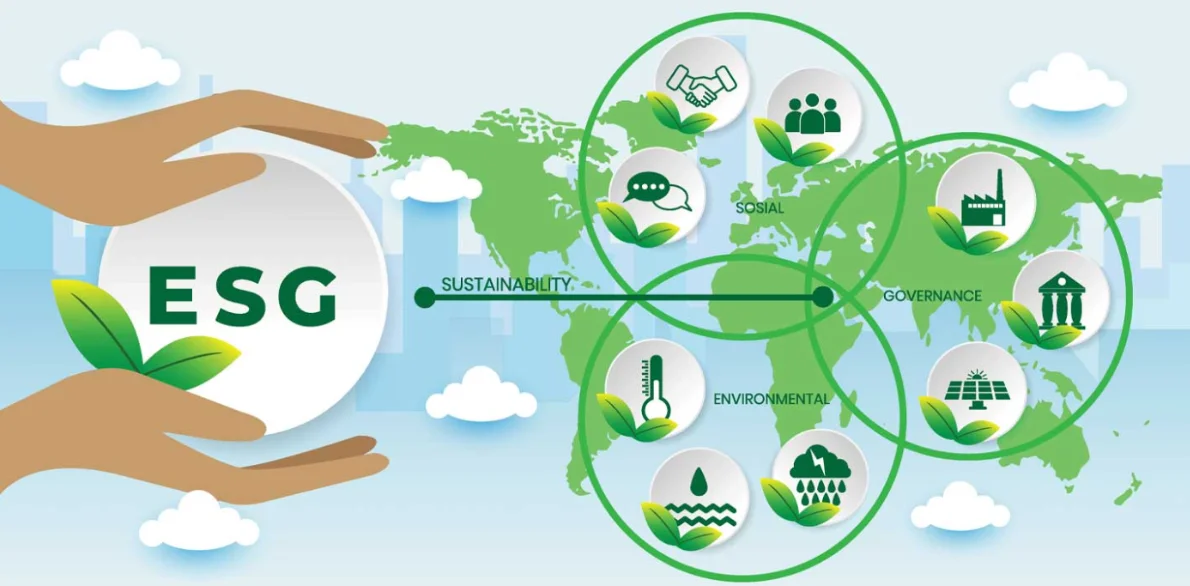
In Australia, the conversation around ESG sustainability is shifting fast. What once lived comfortably in annual reports and corporate websites is now shaping how organisations are judged by regulators, investors, employees, and customers. The change is subtle but profound: ESG is no longer about how responsible an organisation sounds, but about how prepared it truly is for long‑term risk and scrutiny.
This shift is being accelerated by emerging frameworks such as ASRS sustainability reporting, which are forcing organisations to confront the gap between stated intention and operational reality.
- ESG Is Moving From Narrative to Evidence
- Why ASRS Is Changing the Stakes
- ESG Sustainability as a Governance Stress Test
- The End of Sustainability Silos
- Operational Reality Now Shapes ESG Outcomes
- Transparency Is Driving Cultural Change
- Why Minimum Compliance Is a Strategic Risk
- A New Definition of ESG Sustainability Maturity
ESG Is Moving From Narrative to Evidence
For years, ESG sustainability efforts often relied on narrative strength—clear commitments, ambitious targets, and polished messaging. In today’s Australian context, that approach is no longer sufficient. Stakeholders increasingly expect sustainability claims to be backed by systems, controls, and governance pathways that can withstand inspection.
ESG sustainability is becoming less about aspiration and more about evidence. Organisations are now being assessed on how sustainability risks are identified, managed, and reviewed in real time. This marks a fundamental transition: ESG is becoming a management discipline, not a communications exercise.
Why ASRS Is Changing the Stakes
ASRS sustainability reporting introduces a new level of expectation around consistency, integration, and traceability. Rather than allowing sustainability information to sit apart from financial and operational systems, ASRS aligns reporting with governance and risk management structures.
In practice, this means Australian organisations can no longer “assemble” ESG information at the end of the year. Sustainability performance must be monitored continuously, just like financial risk or safety performance. The process exposes weaknesses quickly disconnected data, unclear accountability, or controls that exist only on paper.
For many organisations, ASRS is revealing that ESG sustainability maturity is not about what is promised, but about what can be demonstrated.
ESG Sustainability as a Governance Stress Test
One of the most under‑discussed impacts of ESG sustainability expectations is how they test governance behaviour. Boards and executives are increasingly expected to understand sustainability risks at a practical level, not just endorse high‑level strategies.
ASRS sustainability reporting reinforces this by requiring stronger alignment between sustainability disclosures and decision‑making processes. Questions shift from “Do we have a policy?” to “How do we know our controls are working?” and “How do sustainability risks influence our strategic choices?”
In the Australian regulatory environment, where director due diligence is under growing focus, these questions carry real consequences.
The End of Sustainability Silos
Another emerging perspective is the collapse of functional silos. ESG sustainability risks rarely sit neatly with one team. Climate risk affects finance and operations. Workforce wellbeing affects productivity and retention. Supply‑chain ethics affect procurement and reputation.
ASRS reporting expectations make these interdependencies impossible to ignore. Sustainability data must be consistent across the organisation, which exposes whether teams are working in isolation or alignment. Organisations that still treat sustainability as a standalone function often struggle to maintain coherence under ASRS scrutiny.
Operational Reality Now Shapes ESG Outcomes
In Australia’s evolving climate and regulatory landscape, day‑to‑day operational decisions increasingly shape ESG outcomes. Choices about suppliers, materials, energy use, rostering, and asset maintenance all influence sustainability performance.
This means ESG sustainability is no longer a future‑focused aspiration—it is impacted daily by operational judgement. ASRS sustainability reporting brings these realities to the surface, highlighting whether sustainability considerations genuinely influence how work is done.
Organisations that embed sustainability into operational decision‑making find reporting far less disruptive. Those that don’t often experience ESG reporting as a scramble to reconcile gaps after the fact.
Transparency Is Driving Cultural Change
A less obvious but critical effect of ESG sustainability expectations in Australia is cultural. As transparency increases, tolerance for internal disconnects decreases. Teams become more careful about assumptions, more collaborative across functions, and more accountable for outcomes.
ASRS sustainability reporting acts as a forcing mechanism for this cultural shift. When reporting relies on verifiable systems rather than narrative strength, behaviours upstream begin to change. Sustainability becomes something people do, not just something they talk about.
Why Minimum Compliance Is a Strategic Risk
Some Australian organisations may still approach ESG sustainability with a minimum‑viable mindset—doing just enough to meet reporting requirements. In a low‑scrutiny environment, this might have worked. Under ASRS sustainability reporting expectations, it is becoming increasingly risky.
As assurance standards rise, discrepancies between reported ESG claims and operational practices become harder to defend. What looks like compliance today can quickly turn into reputational or regulatory exposure tomorrow.
A New Definition of ESG Sustainability Maturity
The emerging reality is this: ESG sustainability in Australia is no longer judged by ambition, but by alignment. Alignment between values and systems, between disclosures and decisions, and between governance and operations.
ASRS sustainability reporting is accelerating this shift, turning ESG into a lens through which organisational readiness is assessed. Those who treat it as a strategic opportunity to strengthen systems and oversight will gain resilience. Those who treat it as a reporting obligation risk discovering that sustainability is no longer something that can be managed at arm’s length.
In this new landscape, ESG sustainability is not about standing out—it is about standing up to scrutiny.