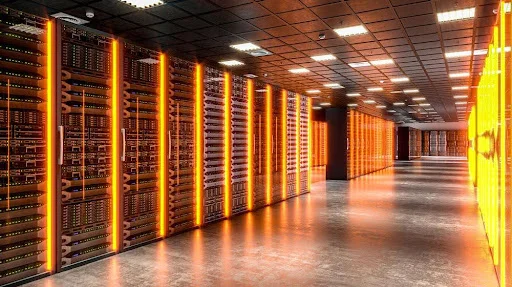
Data Centers have become the backbone of the modern digital economy. From artificial intelligence (AI) training systems to cloud platforms and real-time applications, these facilities are responsible for processing and storing massive amounts of data.
In 2026, the sector is witnessing rapid transformation driven by the explosive growth of AI workloads and unprecedented infrastructure investments. Recent developments—such as microgrid-powered facilities in Ireland and billions of dollars in funding for AI infrastructure suppliers—demonstrate how the data center industry is evolving to support the next wave of computing.
- AI Data Centers Are Driving a New Power Infrastructure Model
- Infrastructure Investment Accelerates Across the AI Data Center Ecosystem
- Capacity Constraints Are Reshaping Data Center Strategy
- According to Next Move Strategy Consulting: Industry Impact of Recent Developments
- Next Steps: Strategic Actions for Industry Stakeholders
AI Data Centers Are Driving a New Power Infrastructure Model
The rapid growth of artificial intelligence is placing enormous pressure on energy infrastructure. AI training clusters require significant computing power, and each cluster can consume between 10–20 megawatts of electricity, comparable to the energy consumption of a small town.
To address this challenge, companies are exploring microgrid-powered data centers that can generate and manage electricity independently from traditional public grids.
One example is a newly launched microgrid-based facility in Ireland developed through collaboration between AVK and Pure Data Centres. Instead of relying solely on national power infrastructure, the facility integrates distributed energy sources—including renewable energy, natural gas generation, and battery storage—to maintain stable power supply for high-performance computing.
This model is particularly important in regions where grid capacity constraints are slowing new data center development.
Key Operational Advantages of Microgrid-Powered Data Centers
| Feature | Impact on Data Center Operations |
| On-site power generation | Reduces reliance on congested public grids |
| Battery storage systems | Stabilizes power during peak computing loads |
| Renewable energy integration | Supports sustainability goals |
| Faster deployment timelines | Avoids long grid upgrade delays |
In some cases, traditional grid-connected data centers may wait three to five years for sufficient electrical infrastructure upgrades. By contrast, microgrid facilities can reach operational status in roughly 18–24 months once power generation capacity is secured.
The shift toward microgrid-powered data centers indicates that energy availability is becoming a strategic constraint for AI infrastructure expansion. Insights from Next Move Strategy Consulting indicate that organizations integrating independent power systems with computing infrastructure are likely to achieve faster deployment timelines while strengthening operational resilience and long-term energy security for large-scale AI operations.
Infrastructure Investment Accelerates Across the AI Data Center Ecosystem
While energy innovation addresses operational challenges, financial investment is rapidly expanding across the data center supply chain.
A major example involves funding for an AI infrastructure supplier backed by prominent venture capital firms including Lightspeed Venture Partners and Andreessen Horowitz. The companies supported a $4.2 billion funding initiative to scale technologies used in AI data centers.
The funding highlights a growing recognition among investors that the AI boom is not only about software or chips—it also requires massive infrastructure expansion across the entire computing ecosystem.
Key Areas Attracting Investment
- High-density compute infrastructure
- Advanced networking and optical connectivity
- Power management systems
- Cooling and energy optimization technologies
- Modular and scalable data center architecture
These investments aim to support hyperscale data center operators and AI developers that require enormous computing clusters to train large models.
Capital investment trends indicate that the data center value chain is expanding beyond traditional real estate and colocation services. Analysis from Next Move Strategy Consulting indicates that infrastructure suppliers providing specialized AI hardware integration, advanced power systems, and high-speed networking capabilities are becoming increasingly critical participants in the rapidly evolving global AI economy.
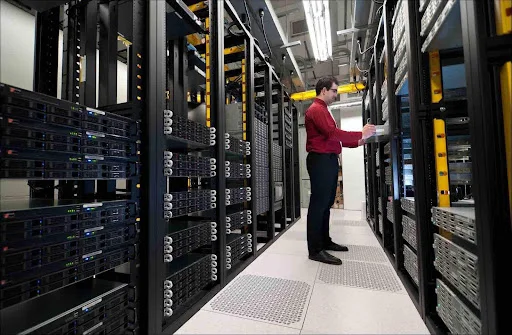
Capacity Constraints Are Reshaping Data Center Strategy
Another key trend influencing the data center sector is the growing imbalance between computing demand and infrastructure capacity.
In some European markets, power constraints and limited data center availability have led to extremely low vacancy rates. For instance, vacancy in certain European data center markets dropped to approximately 1.2% in late 2025, while rental rates in power-constrained regions increased by 34% year over year.
Such conditions are forcing developers and operators to rethink infrastructure design, including:
- Building facilities closer to renewable energy sources
- Developing distributed data center networks
- Integrating private energy generation
- Accelerating modular construction methods
Infrastructure bottlenecks, particularly those related to electricity supply, are becoming one of the most decisive factors shaping the global data center market. Our observations at Next Move Strategy Consulting indicate that companies capable of securing reliable power access and deploying computing capacity more rapidly are likely to gain a significant competitive advantage within the evolving AI ecosystem.
According to Next Move Strategy Consulting: Industry Impact of Recent Developments
The recent developments reported in the news suggest several long-term shifts in the data center industry:
1. Energy Infrastructure Is Becoming Part of Data Center Strategy
Microgrid-powered facilities demonstrate that energy generation and data processing infrastructure are becoming closely integrated.
2. Venture Capital Is Moving Deeper into AI Infrastructure
The $4.2 billion funding initiative backed by Lightspeed Venture Partners and Andreessen Horowitz indicates strong investor confidence in AI infrastructure suppliers.
3. AI Demand Is Redefining Capacity Planning
Hyperscale computing clusters require significantly higher power density than traditional cloud workloads, forcing operators to redesign facilities and energy systems.
4. Speed of Deployment Will Determine Market Leadership
Companies able to deploy data center capacity faster—through modular designs or private energy systems—will be best positioned to serve AI developers and cloud platforms.
Next Steps: Strategic Actions for Industry Stakeholders
Organizations operating in the data center ecosystem can consider the following actions:
1. Integrate Energy Planning Into Infrastructure Strategy
Develop on-site power generation and storage systems to ensure reliable operations.
2. Invest in Modular and Scalable Infrastructure
Rapidly deployable data center designs can help meet growing AI demand.
3. Expand Partnerships Across the Infrastructure Ecosystem
Collaboration between energy companies, hardware providers, and AI firms will accelerate deployment.
4. Focus on Efficiency and Power Optimization
Reducing energy consumption per compute unit will become a major competitive differentiating factor.
5. Monitor Infrastructure Investment Trends
Funding activity in AI infrastructure suppliers signals where the next wave of innovation will emerge.
About the author:

Joydeep Dey is a seasoned SEO Executive, Content Writer, and AI expert with over 2½ years of experience in digital marketing and artificial intelligence. He specializes in SEO strategy, impactful content creation, and developing data-driven, AI-powered solutions that enhance online visibility and engagement. With a strong foundation in natural language processing and emerging AI technologies, Joydeep is known for simplifying complex concepts into clear, actionable insights. He can be reached at info@nextmsc.com.