Running feels completely different when every step lands in time with the music. With Musick AI, runners can move beyond generic mixes and build playlists that match pace, distance, and mood using an AI Music Generator built for flexible, royalty‑free music creation across genres and styles. This guide explains how to turn those capabilities into practical, repeatable steps any runner can use.
I. Understanding Pace‑Perfect Running Music
- Why tempo matters more than genre
- A consistent beat helps stabilize cadence, which can make longer runs feel smoother and less tiring.
- Matching music tempo roughly to steps per minute supports a natural rhythm instead of forcing awkward stride changes.
- Once tempo is right, genre becomes a secondary choice focused on motivation and personal taste.
- Using Musick AI’s genre variety for runners
- Musick AI supports many genres such as EDM, hip‑hop, pop, jazz, rock, and more, so runners can create playlists that still feel like “their” music while keeping tempo in range.
- Different segments of a run can use contrasting genres (for example, relaxed R&B for warm‑up and energetic EDM for intervals) without losing beat consistency.
- Genre options make it easier to adjust intensity: heavier styles for hills, softer styles for recovery segments.
- Matching music to running goals
- Short, fast runs benefit from higher‑energy tracks with punchy percussion and bright synths.
- Steady aerobic runs usually feel better with moderate tempos and smoother arrangements that don’t demand too much attention.
- Long runs can mix uplifting and calm pieces to prevent fatigue and keep motivation from rising and crashing.
II. Setting Up Musick AI for Running Playlists
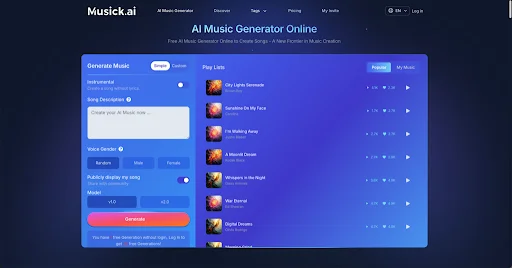
- Start with the “Generate Music” section
- On Musick AI, runners can create songs without lyrics by choosing the “Instrumental” option, which removes vocal distractions during focused efforts.
- The prompt box accepts clear descriptions such as “uplifting electronic track for a 5K run at moderate intensity,” helping the system understand mood and style.
- Describing the topic or vibe (for example, “morning run through the city”) guides the AI toward suitable rhythmic energy.
- Use prompts that reflect pace and mood
- Runners can specify tempo targets indirectly through wording like “upbeat,” “energetic,” “fast‑paced,” or “steady and calm,” combined with the length of the track they want.
- Including elements such as “catchy melody,” “strong kick drum,” or “smooth background pads” helps shape how intense each section feels.
- Mentioning “intro, verse, chorus, bridge, and outro” encourages a clear song structure that aligns with warm‑up, build‑up, peak, and cooldown segments.
- Choose vocal options wisely
- Musick AI allows users to choose a vocalist’s gender when generating songs, which can change the emotional feel of the track.
- For most focused runs, instrumental music keeps cadence front‑and‑center, while vocals can be reserved for easier days or motivational finishing segments.
- Runners mixing lyrics and instrumentals can alternate them to avoid mental fatigue during longer sessions.
III. Crafting a Playlist for Each Part of the Run
- Warm‑up: smooth build rather than instant intensity
- A warm‑up playlist can use prompts like “gentle, optimistic pop with gradual build‑up and light percussion” to avoid jumping straight into high intensity.
- Slightly slower tempos and softer arrangements prepare joints and muscles while keeping motivation positive.
- Including subtle, evolving melodic lines prevents boredom without pushing runners to accelerate too soon.
- Main set: align tracks with target cadence
- For the main section, prompts might specify “high‑energy EDM track with strong, consistent beat and driving bassline, perfect for tempo running.”
- A series of songs with similar rhythmic intensity reduces the need to constantly adjust stride or pace.
- Runners can generate several variations with similar prompts, then select the tracks that feel best in actual training.
- Cooldown: controlled drop in energy
- Cooldown tracks benefit from phrases like “relaxed, reflective track with soft synths and gentle percussion for post‑run recovery.”
- Melodies that resolve smoothly and avoid sudden dynamic spikes can make heart rate come down more comfortably.
- Including a clear outro structure supports mental closure, signaling to the body that the hard work is finished.
IV. Using Musick AI Features to Refine Running Music
- Explore “My AI Music” and mood templates
- In the “My AI Music” area, Musick AI provides mood templates that help runners quickly discover tracks matching emotions like energetic, calm, or inspiring.
- These templates make it easier to label songs according to use (warm‑up, intervals, easy run, long run) rather than sorting manually every time.
- Over time, a runner’s library can grow into a personalized catalog of training‑ready music grouped by effort level.
- Experiment with different tools around Musick AI
- Supporting tools such as the AI Beat producer let users specify melody notes and rhythmic ideas, which can be shaped into custom running beats.
- An AI Rap Generator can help create spoken‑word or rap‑style motivation segments tailored to personal themes or training goals.
- These tools together function like an AI Music Maker, turning rough concepts into repeatable, structured tracks that fit distinct workout types.

- Draw inspiration from existing AI music
- Musick AI showcases playlists and latest AI‑generated songs that can serve as inspiration when designing running music styles.
- Hearing how other compositions handle build‑ups, drops, and transitions helps runners learn which musical shapes feel best during specific run segments.
- Runners can adapt prompts based on favorite examples, describing which aspects they liked (for example, “smooth breakdown before final chorus”).
V. Building Different Running Scenarios with Musick AI
- 5K race preparation
- For race‑pace workouts, runners can generate fast, energetic tracks with strong percussion and minimal breakdowns so the beat never “lets up.”
- A 5K playlist might include one slightly gentler track for warm‑up, a sequence of high‑intensity pieces for the main effort, and one calmer song for cooldown.
- Consistency in tempo and arrangement across main‑effort tracks keeps focus on breathing and stride efficiency.
- Long‑run stamina building
- Long runs benefit from varied but cohesive music: alternating uplifting songs with calmer instrumental pieces to avoid mental burnout.
- Prompts can emphasize “steady rhythm, optimistic mood, and evolving textures” to make time pass pleasantly without constant spikes in intensity.
- Using Musick AI as an AI Song Maker, runners can create extended tracks that naturally flow through multiple sections, reducing the need to skip songs mid‑run.
- Interval and hill training
- Interval sessions require sharp changes in intensity, so prompts can specify “explosive chorus with powerful drums” for effort segments and “soft, minimal verses” for recovery.
- Hill repeats feel smoother with bold, epic‑style music featuring strong rhythmic accents that encourage driving knee lift.
- Saving a set of tracks dedicated to intervals ensures that every high‑effort phase starts with a sound that immediately signals “go.”
VI. Conclusion
Perfectly paced running playlists are not about stacking random favorite songs, but about music that matches cadence, distance, and training goals in a way that still feels enjoyable and personal. By using Musick AI to generate structured, royalty‑free tracks for warm‑ups, main sets, and cooldowns, runners can turn routine sessions into smoother, more rhythmic experiences that are easier to sustain over time. Clear prompts that describe mood, intensity, song length, and structure make this tool work like a focused AI Music Maker, gradually building a library of pieces tuned to 5K training, long runs, intervals, hills, and race day efforts. As that library grows and tracks are tested on the road, playlists stop feeling generic and start acting like part of the training plan itself, supporting better pacing, more stable effort, and a running habit that is easier to stick with on both good days and hard days.