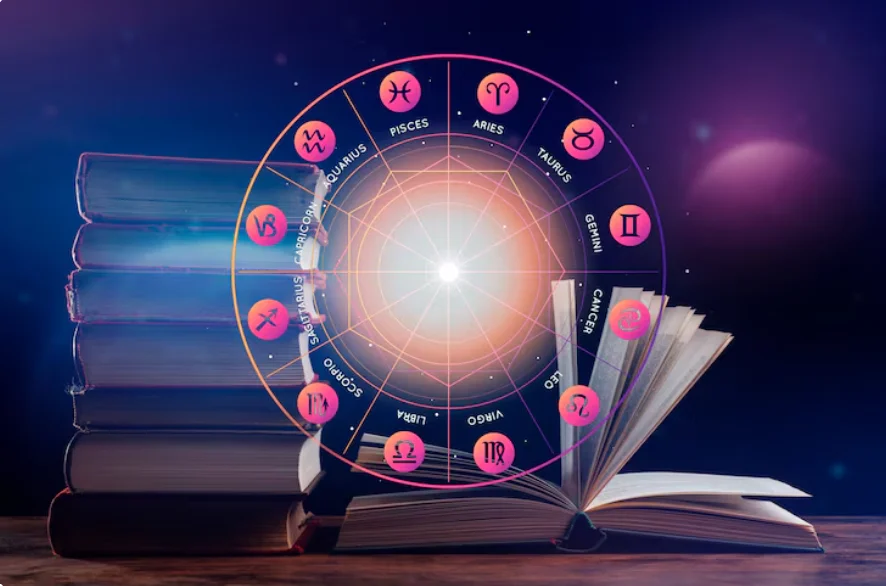
Astrology has long existed as an art form and science, ultimately combining mathematics, intuition, and interpretation; however, the influence of artificial intelligence is changing the game. In particular, the emergence of AI astrology (or AI Jyotish) is changing how people create, read, and understand their kundalis (or birth charts). Activities that used to take hours of painstaking calculations and mapping of planets are now accomplished in seconds. And the challenge is not only speed, it is response precision, personalised experience, and access. AI is connecting traditional Vedic astrology with modern knowledge-enabled digital technology to provide an astrological experience that feels both of the past and future.
So what is AI astrology, and how is it changing the way we think about fate, individuality, and compatibility? In this article, we delve deeper into this digital disruption and how it is changing the spirit of astrology in science, art, and spirituality — and what all this could mean for a future of astrologers and students.
- Comprehending AI Astrology: The Digital Pandit
- The Popularity of AI Jyotish: Why It's So Hot Right Now
- How AI Reads a Kundali Differently
- The Technology Behind AI Astrology
- AI vs. Human Astrologers: Who's the Better Reader?
- The Advantages of AI Astrology
- The Shortcomings of AI in Astrology
- The Limitations of AI in Astrology
- Practical Applications: How Individuals Are Utilising Astrology There.
- The Future of AI Jyotish: A Fusion of Faith and Technology
Comprehending AI Astrology: The Digital Pandit
AI Astrology is the marriage of longstanding astrological systems with artificial intelligence technology – think digital AI Pandit. This system utilises data analytics, pattern recognition, and machine learning to interpret celestial positions similar to a seasoned astrologer.
Typically, astrologers calculate planetary positions manually, based on your date, time, and location of birth, when preparing your kundali. In AI, those same calculations are automated based on precise astronomical databases and algorithms. Furthermore, AI systems analyse thousands of astrological charts and predictions to detect patterns that lead to improving accuracy beyond the human trial-and-error method. This results in AI readings that are quicker and generally more consistent than those from a human.
But the most important difference is that AI does not “believe”. It only processes data, decodes planetary placements, and connects them to traits, timelines, and inferred outcomes based on Vedic or Western astrology books. It is much like an “on-demand” astrologer that remembers each rule of astrology and doesn’t forget to check for retrograde.
The Popularity of AI Jyotish: Why It’s So Hot Right Now
AI astrology tools are popular right now because they make astrology more accessible, faster, and simpler than it has ever been before. Companies like Astrotalk, AstroSage, and GaneshaSpeaks have started utilising AI-driven kundali analysis, where a user can simply enter their birth details to get an instant reading.
People like AI Jyotish because it eliminates human error in numerical calculations and provides insight in seconds. It is also non-judgmental: most users feel more comfortable discussing their love life or financial woes with an AI than a human astrologer. Plus, many AI astrological analyses use natural language processing (NLP) not only to provide predictions, but in a way that is conversational and simple to understand, with no complex astrological terms or jargon.
From younger millennials looking at compatibility reports to professionals looking for guidance in their day, simple AI astrology has made spiritual and mystical insight feel as easy as checking the weather app.
How AI Reads a Kundali Differently
A kundali is drawn in traditional astrology based on the exact time, date and location of birth, locating the position of the planets in the twelve houses and twelve zodiac signs. AI certainly draws from this same framework, but is able to add accuracy from computation and additional depth using deep learning.
When an AI reads your kundali, it does not stop with the identification of your Lagna or Moon sign, as it analyses the planetary transits, doshas, yogas, and dashas that occur over thousands of historical data points to identify likely future trends. Some high-powered tools take this a step further, building on this history with each user’s data to personalise predictions by assessing some similar data points of relevant life paths to millions of anonymised users — creating data-enriched destiny patterns.
This machine-learned perspective enhances your experience of reading a kundali. Instead of a vague prediction of a future possible life change that might say, “You may be changing your career soon,” an AI might say, “Based on your Saturn-Mercury position, and other related historical data patterns, a career transition is likely to happen between November and March.”
The Technology Behind AI Astrology
At its foundation, AI astrology relies on four main technologies:
- Machine Learning (ML): The algorithms that process and analyse data are trained on massive datasets of astrological readings, predictions, and outcomes to locate patterns that can correlate to a life event.
- Natural Language Processing (NLP): NLP enables AI to translate complex insights from planetary energy into simple human language.
- Predictive Analytics: This technology combines real-time astronomical data with behavioural insights to improve future predictions.
- Data Mining: AI can sift through thousands of birth charts along with their corresponding known outcomes and find statistical connections between celestial activities and human behaviour.
Recently, digital astrology assistants (like AI Pandit) have been on the rise. These platforms can create kundalis, compatibility charts, and present individualised remedies, like stone suggestions or personal rituals. It is common for these systems to be self-improving, evolving their learning through a user-based feedback loop and managing their interpretive logic.
AI vs. Human Astrologers: Who’s the Better Reader?
This is one of the most discussed issues in modern astrology, and it falls somewhere in the middle. AI can quickly compute where the planets are, find yogas, and deliver highly accurate reports in seconds – which is a great time-saver for astrologers who do it by hand. That all said, however, an experienced astrologer can bring their own empathy and intuition to the reading – something AI lacks. Humans can read the finer aspects of a reading, listen to emotional nuances, and provide spiritual guidance – also something AI is not capable of yet.
Usually, though, the best outcome comes from a hybrid situation – where the AI can handle the technical accuracy and computing, while the human astrologer provides the interpretation and emotional connection. This is probably similar to the way a doctor uses an AI tool to do scans and then relies on their experience to make a diagnosis.
The Advantages of AI Astrology
- Instant Kundali Creation: AI systems can generate reasonably accurate charts in seconds — without manual calculations.
- Available Anytime: You can receive readings at any time, without waiting for an appointment to see someone.
- Mathematical Precision: All computations are performed precisely, ensuring reliable planetary placements.
- Artificial Intelligence: AI learns about your patterns and preferences and provides customised advice.
- Affordable: There are numerous free or low-cost AI-based reports, so anyone can access astrology.
To many, AI astrology has modernised an ancient human experience into a self-help tool. It’s astrology in your pocket — via chatbots, applications, and even voice from your phone.
The Shortcomings of AI in Astrology
Although AI astrology has a lot to offer, it is not perfect. First and foremost, AI lacks emotional intelligence — AI can share what is likely to occur, as opposed to how to respond emotionally to those events or how to process them.
Another consideration is its dependence on data. The accuracy of AI is only as good as the data it was trained with. If the input data is biased or incomplete, the predictions are likely to be skewed. Also, AI lacks the richness of a spiritual pursuit that traditional or skilled astrologers may couple with readings and meanings, traditionally viewing them in light of karmic lessons or spiritual growth that an algorithm probably cannot generate in a deeply authentic way.
Another consideration is privacy. In the midst of asking deeply personal questions, like when I was born or what my birth time is, people are asked to share personal information to astro-type platforms, while those platforms are asked to use this data ethically while maintaining the user’s confidentiality, especially when these kinds of discussions can be deeply personal.
The Limitations of AI in Astrology
There is no denying that AI astrology provides some advantages, but it also has weaknesses. The first weakness is that AI lacks emotional intelligence – it can provide an analysis of what is likely to occur, but cannot help a person engage in meaningful emotional processing.
A second concern is that AI is entirely dependent on data. The effectiveness of the AI’s predictions is only as good as the data it has been trained on. If the input data is missing or biased, then the AI’s conclusions can be flawed. AI also lacks any sense of spiritual depth – traditional astrologers can often contextualise the information in their predictions in either karmic lessons or lessons of spiritual growth, and so an algorithm cannot recreate that with authenticity.
Lastly, privacy violations can be a concern. When individual users provide sensitive personal information – including their date of birth and a specific question about their life – the user can wonder what will happen with their data, and whether it will be stored is assumptions of ethical use, distribution, and access are factored in. With astrology, the user has often shared very sensitive personal information that they wouldn’t normally share with a stranger, including the ideas contained in their questions.
Practical Applications: How Individuals Are Utilising Astrology There.
- Daily Suggestions: AI astrology programs provide customised daily horoscopes and reminders for favourable planetary hours.
- Compatibility Assessments: AI can compare the kundalis of two people to evaluate relationship readiness with extreme precision.
- Career and Financial Predictions: Many professionals are using the AI-based charts to find lucky times to make financial decisions or change jobs.
- Health Insights: Some tools analyse the astrological patterns and predict that a person may experience high levels of stress or low energy.
- Recommendations: AI can make recommendations about gemstones, mantras, or rituals based on planets’ weaknesses, which is essentially the same service offered by an astrologer.
For instance, if your Saturn is weak, the AI Pandit would suggest wearing blue sapphire or chanting some mantras, based on the timing of your planetary return and traditional text and probability.
The Future of AI Jyotish: A Fusion of Faith and Technology
AI Jyotish is not designed to take the place of astrologers — it intends to make astrologers better. At some point in the future, an AI system will combine quantum computing in almost real-time astronomical tracking as a means of delivering sophisticated predictions. We may soon see AI tools that can learn not only from retrievable data (like planetary movements and sign placements), but also from the emotional consequences of a reading — producing warm-caring, empathetic prediction engines!
Picture a daily horoscope, complete with a planetary pattern of the day, available to you first thing in the morning and synced with your calendar. Or imagine an AI tool that prompts you when Mercury retrograde returns to your decision-making process. These future possibilities are much closer than you think!
The goal here isn’t to usurp human wisdom; it is to make astrology more intelligent, faster, and more inclusive.