The financial industry is growing very fast because of the emergence of technology like artificial intelligence, sustainability, data analytics, international regulation, and blockchain. Even though positions such as equity research, investment banking, and portfolio management have always been in high demand, companies are now hiring candidates with a CFA degree who possess analytical knowledge and technology skills.
The CFA full form (Chartered Financial Analyst) certification provides extensive knowledge about ethics, investment analysis, financial markets, and risk management, which makes it a very useful qualification in both traditional and new finance industries. The modern finance industry offers various career options that go beyond the boundaries of traditional investment careers.
Top Emerging Finance Careers That Every CFA Degree Professional Must Be Aware Of
1. Investment Banking and Corporate Finance
Despite changing industry trends, investment banking continues to be one of the most popular career paths among CFAs. This is because of the great importance that the industry accords to valuation, financial analysis, mergers and acquisitions, and capital markets. Professionals assist companies in raising funds, offering financial advice, and effecting acquisitions. The syllabus for the CFA degree examination helps candidates gain a solid grounding in various areas, including financial modelling, portfolio management, and equity valuation.
The demand for professionals in the field of investment banking will continue to exist in the coming years owing to globalisation and growth needs of companies. CFAs who have certification and have financial modelling skills along with internship experience should try their luck at being a Corporate Finance Associate, Investment Banking Analyst, M&A Consultant, or Financial Advisory Specialist.
2. Asset and Portfolio Management
Asset management is changing with increasing need for customised investment strategies and creating wealth. Portfolio managers analyse the financial markets, create investment portfolios, and measure risks according to clients’ financial goals. CFA designation offers knowledge on portfolio management, equities, fixed income, and alternatives and hence is one of the best credentials for such a career path.
Investment platforms, data analysis, and ESG investing have changed the landscape of the asset management sector. CFA full form (Chartered Financial Analyst) holders who understand the basics of investment and future trends of the markets can effectively manage institutional, pension, mutual funds, and high-net-worth portfolios.
3. Risk Management and Financial Analytics
In light of the increasing complexity of financial markets, there is a great demand for experts who will be able to spot, analyse, and reduce the level of financial risks that businesses are facing. As such, risk management professionals deal with market, operational, credit, and liquidity risks and ensure regulatory compliance.
Financial institutions, such as banks and fintech companies, insurance companies, and multinational corporations, seek experts who can enhance the existing framework of enterprise risks. In light of the increased focus on financial resilience and regulations, CFA degree holders have excellent career prospects as Credit Risk Managers, Risk Analysts, Financial Analytics Specialists, or Enterprise Risk Consultants.
4. Wealth Management and Financial Advisory
A personalised financial plan is increasingly necessary for areas such as retirement planning, investing, estate planning, taxes, and asset protection. Wealth Managers work with their clients and assist them in developing personalised investment strategies according to their requirements and the amount of risk that they are prepared to take. The CFA qualification would help to enhance credibility through specialisation in investment decisions and portfolio management.
Products based on Artificial Intelligence, Robo Advisors, and Digital Wealth Management are revolutionising our perspective on advisory services, but the human experience cannot be neglected in strategic financial planning. The CFA degree candidate can merge technical competence with interpersonal skills and choose a career in Private Banking, Financial Advisory, Wealth Management, and Investment Consulting within a Family Office.
5. FinTech, Data Analytics, and AI-Driven Finance
The fast-paced implementation of technologies such as artificial intelligence, blockchain, machine learning and big data analytics is altering the finance sector. Current finance specialists should be able to analyse data, use technology, and automate financial processes to improve their work. Candidates who are interested in CFA full form (Chartered Financial Analyst) careers and want to acquire technical skills in addition to financial knowledge will definitely be valued.
Many companies that deal with FinTech, hedge funds, digital banking and financial technologies hire people who can integrate their finance knowledge with technology. Examples of such career choices include Quantitative Analyst, Financial Data Analyst, AI Investment Specialist, FinTech Product Manager and Digital Finance Consultant. This fusion of finance and technology is going to be one of the most promising career choices for future CFA professionals.
Final Takeaway
Finance is becoming more than what it used to be before, opening up interesting prospects for CFA degree holders who are willing to apply their finance skills and knowledge together with the knowledge and experience in technology and decision-making. CFA candidates can position themselves for high-growth roles that provide long-term career stability and international opportunities.
Your CFA journey can lead to far more than traditional finance roles! Contact the Zell Education team to gain knowledge, practical skills and industry insights to excel in emerging, high-demand global finance opportunities.
FAQs
1. Which emerging finance career is best suited for CFA candidates?
These include positions in wealth management, investment analysis, finance technology, ESG investing, and risk management.
2. Are there any technical requirements needed to enter emerging finance professions?
Some understanding of financial modelling and digital tools would help increase one’s chances of success.
3. How should CFA candidates equip themselves for new finance jobs?
Through the combination of their CFA knowledge and practical experience, along with network building and upgrading of their skills through new technology.
____________________________________________________________________________
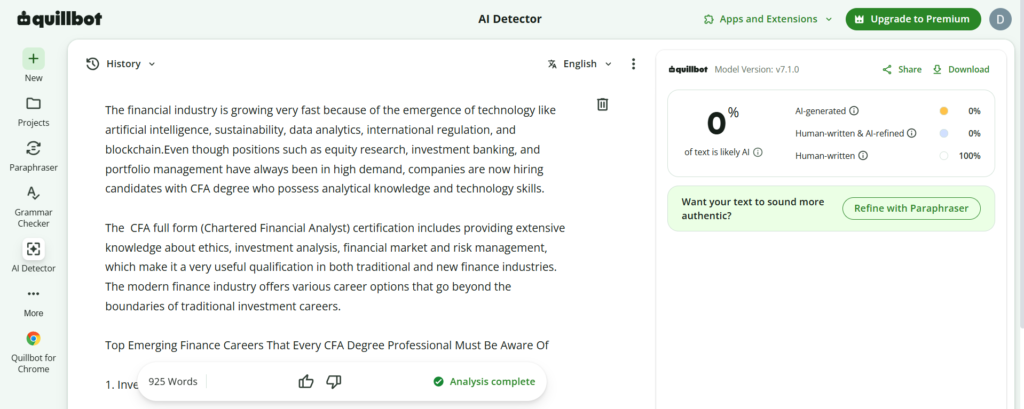
Quillbot Report
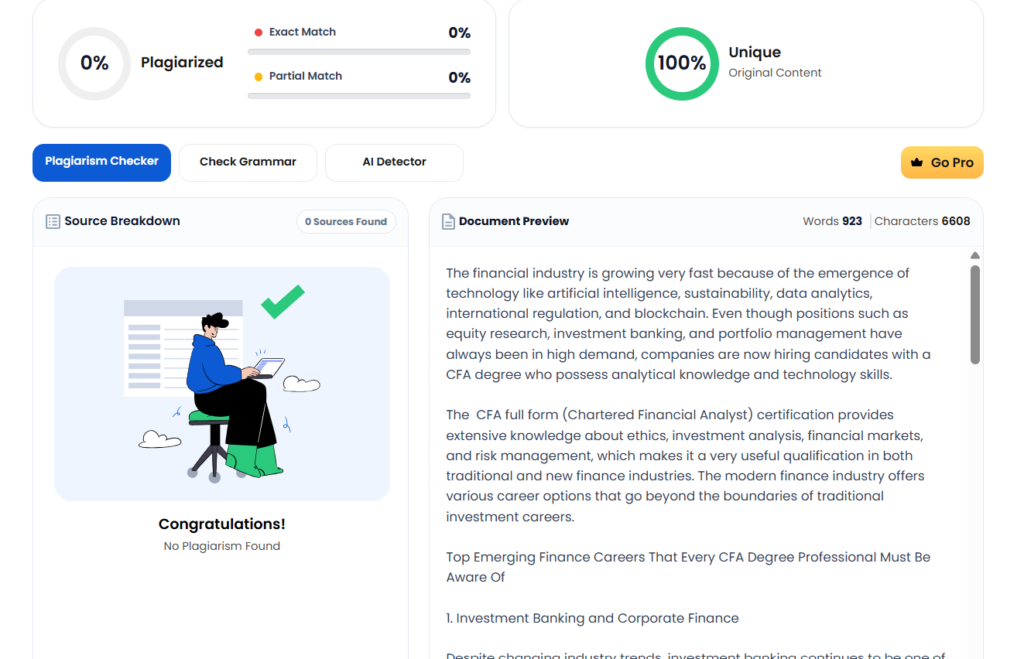
Plagiarism Report