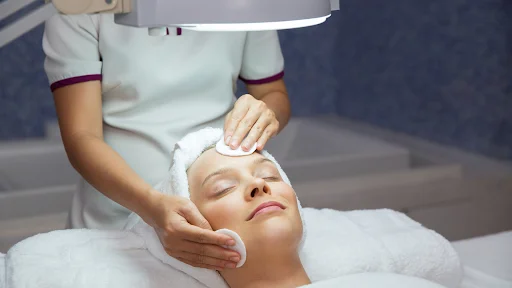
Those fine lines around your eyes? They’re getting deeper. Your skin texture isn’t bouncing back as it did five years ago. Sound familiar? The shelves are packed with anti-aging creams making wild promises, yet most barely scratch the surfaceliterally. They can’t reach the deeper skin layers where aging actually takes root. Once you hit 25, collagen production drops roughly 1% each year. Do the math. Without meaningful intervention, those visible changes multiply. This guide walks you through the skin treatments that actually transform aging skin and shows you how to build a routine that works.
- Understanding Resurfacing Facials: The Science Behind Skin Transformation
- Complete Guide to Facial Resurfacing Treatments: Options for Every Skin Concern
- Building Your Personalized Anti-Aging Skincare Routine Around Resurfacing Facials
- Investment Analysis: Cost, Value, and ROI of Resurfacing Facials
- Your Questions About Resurfacing Treatments Answered
- Taking the Next Step Toward Younger-Looking Skin
Understanding Resurfacing Facials: The Science Behind Skin Transformation
Unlike your neighborhood spa facial that leaves you glowing for a weekend, these treatments penetrate the dermal layers where aging starts its march. Here’s why they work.
The Biology of Skin Aging and Collagen Depletion
Your skin’s structural foundation begins crumbling sooner than most realize. That steady 1% yearly collagen decline compounds quickly 50 and you’ve sacrificed roughly 25% of your skin’s scaffolding. The demand for non-surgical aesthetic procedures jumped 80% in just two years, which tells you something about how many people are actively searching for legitimate solutions.
Standard topical products hit a biological wall. They’re designed for the epidermis, but firmness and elasticity depend on the dermis below. When that foundation weakens, you end up with sagging, wrinkles, and that exhausted appearance no cream can erase. It’s architecture, not decoration.
How Resurfacing Facials Trigger Cellular Renewal
This is where it gets genuinely interesting. A skilled practitioner uses calculated micro-injuries that activate your skin’s repair mechanisms at full throttle. Fibroblasts hardworking cells that manufacture collagensuddenly wake up and start churning out fresh structural proteins.
The mechanism involves either ablative techniques or non-ablative methods (heating tissues beneath without surface removal). Both approaches flip the same biological switches. Just different recovery timelines. You’re essentially fooling your skin into behaving younger by forcing regeneration.
Fresh collagen doesn’t materialize immediately. Full development takes weeks, sometimes months. That’s exactly why results continue improving long after treatment. It’s also why these procedures deserve a central role in every legitimate anti-aging skincare routine.
Resurfacing vs. Traditional Facials: Critical Distinctions
Standard facials cleanse, exfoliate, hydratethey’re upkeep. Resurfacing actually restructures your skin’s foundation. One addresses the surface; the other rebuilds underneath.
Your typical facial delivers a pleasant glow for maybe three days. Resurfacing can subtract years from your appearance, with effects lasting months or longer. Treatment depth determines everything when you’re tackling genuine aging concerns.
Consider this perspective: that $200 prestige cream lasts maybe three months. Annually, you’re dropping $800 on a product confined to surface action. One mid-tier resurfacing facial costs approximately the same but fundamentally remodels skin structure.
Now that the mechanism behind cellular renewal makes sense and you understand why resurfacing diverges from surface treatments, let’s explore which specific technology matches your particular aging concerns.
—
Complete Guide to Facial Resurfacing Treatments: Options for Every Skin Concern
The sheer number of choices might seem intimidating at first. Each technology targets distinct problems, though. Here’s your breakdown of what actually works.
Laser Resurfacing Technologies
CO2 lasers represent the aggressive option for pronounced wrinkles and substantial sun damage. They vaporize damaged layers with surgical precision, though you’ll need roughly two weeks for recovery. Erbium lasers provide a softer alternative for moderate concernshealing usually wraps up within a week.
Chemical Peel Resurfacing
TCA peels reach medium depths and excel at skin resurfacing for wrinkles, sun spots, and rough texture. Phenol peels penetrate deeply, powerful enough to dramatically reverse severe photodamage, but they demand serious consideration before proceeding.
Combination formulas like Jessner’s merge several acids for tailored penetration levels. Your practitioner adjusts concentration based on your concerns and skin characteristics. These anti-aging facial treatments typically perform best as a sequence rather than standalone procedures.
Microneedling with RF Enhancement
This approach marries tiny needles with radiofrequency energy to boost collagen without stripping skin layers. It’s gained popularity partly because downtime barely existsmaybe a day or two of redness, tops.
The RF heat contracts existing collagen, while needling creates pathways for superior product penetration. Less intense than lasers, but you’ll need multiple sessions for equivalent outcomes. Most treatment plans call for four to six appointments spaced monthly.
Selecting the appropriate resurfacing method is just the beginningmaximizing outcomes demands strategic prep work, recovery discipline, and maintenance protocols that enhance cellular renewal and safeguard your investment.
Building Your Personalized Anti-Aging Skincare Routine Around Resurfacing Facials
Your pre-treatment and post-treatment habits carry just as much weight as the procedure. Here’s how to optimize for success.
Pre-Treatment Preparation
Begin a prescription retinoid regimen four to six weeks ahead of your appointment. These conditions help skin cells for better and potentially shorten recovery windows. Your provider may add hydroquinone if hyperpigmentation runs in your history.
Discontinue active ingredientsacids, retinols, the worksabout seven days before treatment. Skip waxing, threading, and aggressive exfoliation, too. You want your barrier function optimized going in. Some practitioners prescribe antiviral meds for patients with a cold sore history since resurfacing sometimes triggers outbreaks.
Fractionated lasers offer the middle ground most people prefer. Skin resurfacing: Hit reset on your complexion with lasers, chemical peels, and dermabrasion that zap dull, damaged skin to reveal a fresh, radiant layer beneath. These create microscopic treatment columns surrounded by untouched tissue, accelerating healing while maintaining effectiveness.
Post-Resurfacing Skincare Protocols
Expect sensitivity and vulnerability after treatment. Commit to gentle, fragrance-free cleansers and rich moisturizers for at least a week. Sunscreen becomes non-negotiablemandatory, not optional. UV exposure on healing skin risks permanent pigmentation disasters.
Resist the urge to pick at peeling skin, however satisfying it might seem. Natural shedding only. Most people reintroduce their standard anti-aging skincare routine around the two-week mark, though your provider’s specific timeline trumps general guidelines. Adding actives prematurely invites irritation or compromised results.
Even with perfectly matched treatments and ideal scheduling, these frequent mistakes can
Investment Analysis: Cost, Value, and ROI of Resurfacing Facials
Let’s discuss money. These treatments require real investment, but understanding the economics helps you decide wisely.
Price Ranges Across Different Resurfacing Modalities
Microdermabrasion runs $75-150 per visit, with multiple sessions required. Chemical peels span from $150 for superficial versions to $3,000+ for deep phenol applications. Laser resurfacing varies dramatically. Fractionated starts around $500, while full-face CO2 can exceed $5,000.
Microneedling with RF typically costs between $300-700 per session. Remember, series treatments are standard. Package pricing often reduces per-session costs substantially. Many practices offer financing through CareCredit or comparable programs.
Cost-Benefit Analysis vs. Daily Skincare Product Investment
Resurfacing results persist for months to years, depending on treatment depth and your maintenance habits. You’re not masking aging signsyou’re reversing them at the cellular level. Factor in the confidence increase and reduced reliance on heavy makeup coverage, and the ROI calculation shifts considerably.
These strategic combination approaches deliver outstanding outcomes, but grasping the financial commitment empowers you to make choices aligned with both aesthetic objectives and budget realities.
Your Questions About Resurfacing Treatments Answered
How often should I get resurfacing treatments for optimal anti-aging results?
Treatment type and intensity determine frequency. Lighter options like microdermabrasion benefit from monthly scheduling, while deeper laser resurfacing might only require annual visits. Most providers recommend beginning with three to six treatment series, then transitioning to maintenance appointments.
Can I combine resurfacing facials with Botox or dermal fillers safely?
Absolutely, but timing is critical. Most specialists advise two-week gaps between injectables and resurfacing to prevent complications. Some combination strategies actually work synergistically, resurfacing the texture while injectables address volume loss and dynamic wrinkles. Always disclose every treatment to your provider for proper scheduling.
Are resurfacing treatments safe for darker skin tones and sensitive complexions?
Specific treatments present elevated post-inflammatory hyperpigmentation risks for darker skin. Non-ablative choices like radiofrequency microneedling generally prove safer across all Fitzpatrick classifications. Partner with an experienced provider who genuinely understands melanin-rich skin. Expect recommendations for test patches and modified protocols.
Taking the Next Step Toward Younger-Looking Skin
The evidence is conclusive that surface-level products simply cannot match treatments that stimulate genuine collagen production and cellular regeneration. Whether you’re addressing fine lines, texture concerns, or photodamage, there’s a resurfacing solution tailored to your needs and skin characteristics. Success hinges on finding qualified providers who customize treatment plans around your objectives, not their profit margins.
Waiting until aging signs become severe is the wrong strategy. Earlier intervention means gentler treatments and superior long-term outcomes. Book consultations with board-certified providers, inquire about their experience with your specific concerns, and insist on viewing before-and-after documentation from patients with comparable skin tones. Your future complexion depends on the decisions you make today.